
Should you replace your kitchen flooring or keep what you have? Many homeowners forget to ask this when planning a renovation. We often focus on cabinets, lighting, and benchtops, but the flooring is just as important.
In this guide, we’ll cover the most popular types of kitchen flooring in Australia, compare their pros and cons, and give practical advice for choosing the right option for your kitchen.
But before we dive into your flooring options, let’s talk about why you might want to rethink your current kitchen flooring materials as part of your renovation budget.

Kitchen Flooring: How It’s Changed Over the Years
Over the years, the way homes are built and how kitchen flooring is installed have changed quite a bit. In older homes, it was common for flooring to run wall-to-wall and continue underneath the kitchen cabinets. These floors were usually solid timber or tiles, creating a seamless, sturdy base built to last.
But sometime in the mid-2000s, that approach shifted. Builders discovered that installing flooring under cabinets added extra material, labour, and cost. Today, with pressure to save on budgets and the fact that the area under cabinets is often not visible, it’s usually skipped.
At the same time, newer flooring options like laminate, hybrid floors and engineered boards became more popular. While they look great, many of these materials aren’t designed to carry the weight of a full kitchen, especially heavy cabinetry and stone benchtops.
It’s a bit like putting a grand piano on a thin shelf. It might seem fine at first, but over time, the pressure takes its toll. Non-structural floorboards weren’t made to support that kind of load, and movement, bowing, or cracking can start to appear.
That’s why, when planning a kitchen renovation, flooring often needs to be part of the conversation and the budget. This is especially important if you’re re-arranging your kitchen layout or moving cabinets, as the floor underneath may need to be addressed.
Why Your Kitchen Flooring Matters More Than You Think
Kitchens work hard. Between spills, steam, heavy appliances and constant foot traffic, your flooring really cops it. And if you choose the wrong one, it can mean damage, repairs, or worse, replacing it sooner than you planned.
Before locking anything in, here are a few simple questions worth asking yourself:
How will it handle water?
Spills, splashes and humidity are part of everyday kitchen life. You want a floor that won’t swell, stain or warp when things get messy.
Is it durable enough?
Think fridges, dishwashers, dropped pans and busy mornings. Can the flooring handle daily wear without showing it too quickly?
What’s the maintenance like?
Be honest with yourself: how much time do you want to spend cleaning? Some floors need regular sealing or special care, while others are much more forgiving.
What’s the true cost?
It’s not just about the price per square metre. Factor in installation, upkeep and how long it’s likely to last. Good value usually means fewer headaches long term.
Does it suit your style?
Your flooring should tie everything together, cabinetry, benchtops, splashbacks and wall colours. The right choice can make the whole kitchen feel more cohesive.
Is it comfortable underfoot?
Kitchens are places you stand in a lot. If the surface is hard, a kitchen mat can help. But it’s still worth thinking about comfort from the start.
Top 6 Kitchen Flooring Types in Australia
| Flooring Type | Approx. Cost (AUD/m²) *not including install | Maintenance | Under/Above Cabinets | Water Resistance | Durability |
| Timber / Hardwood | $120–$250 | Needs care; wipe spills promptly | Under or above | Moderate | Very high; lasts decades |
| Hybrid / Engineered | $70–$150 | Easy to clean | Above only generally (Direct stick engineered flooring can go under) | Low–Moderate; some waterproof | High; stable and strong |
| Tile / Porcelain | $40–$150 | Very easy | Can go under | Very high; water-resistant | Very high; lasts decades |
| Laminate | $50–$80 | Very easy | Above only | Moderate; can swell | Moderate; scratches possible |
| Vinyl / LVP | $30–$80 | Very easy | Above only | High; waterproof options | High; wear-resistant |
| Concrete / Stone | $100–$300 | Easy; seal regularly | Can go under | Very high | Very high; long-lasting |
Hardwood Flooring
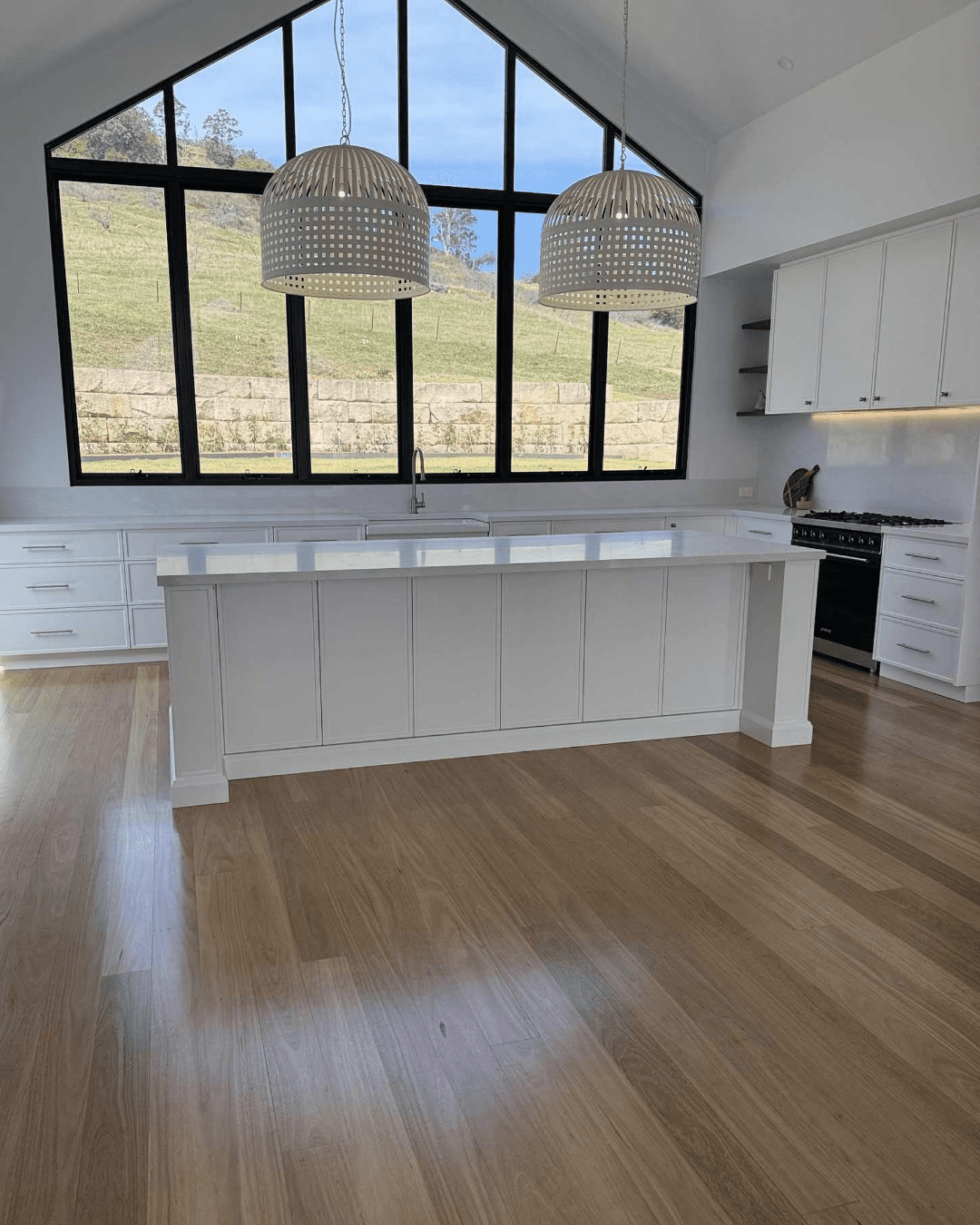
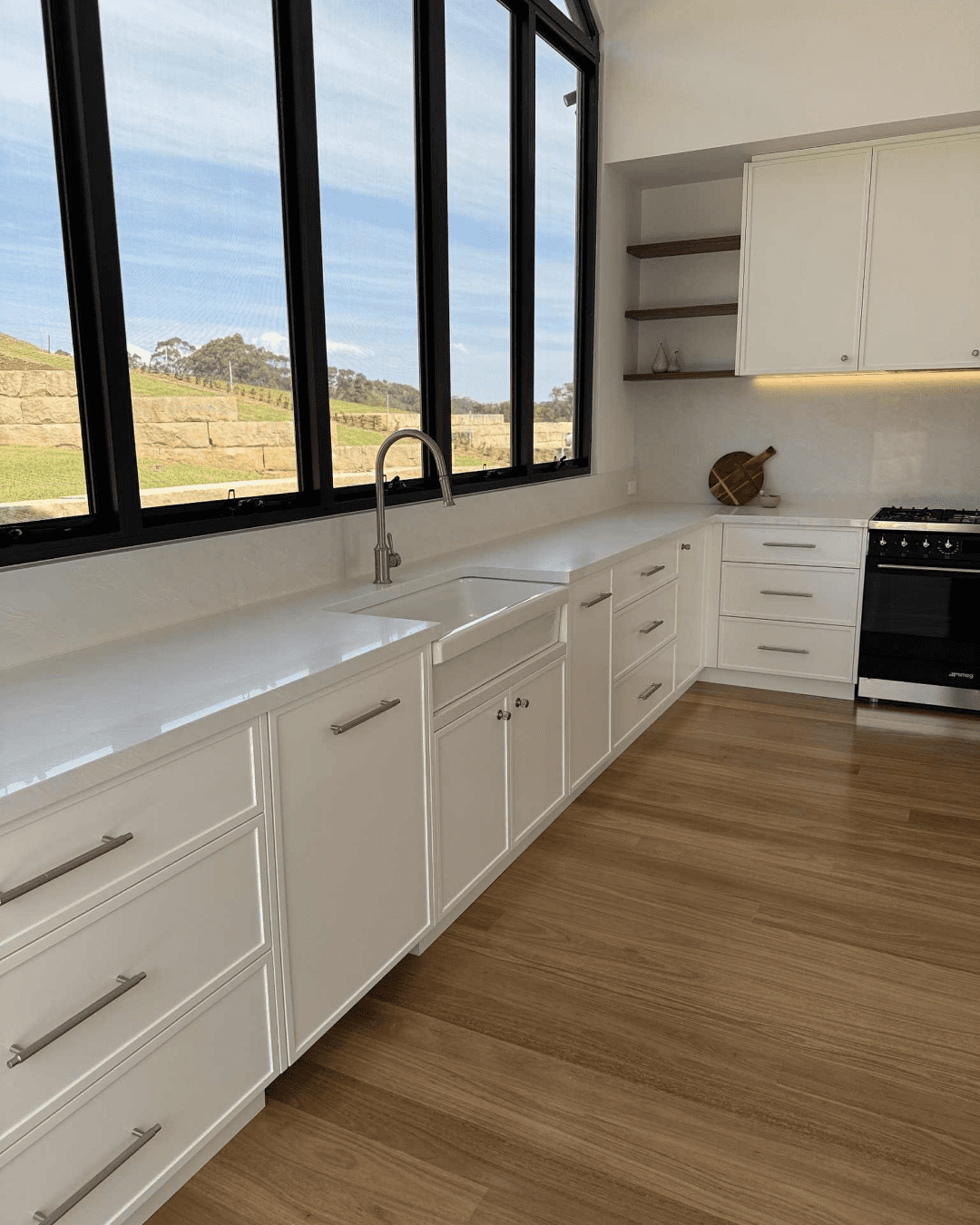
Hardwood flooring is made from solid timber planks like oak, walnut or jarrah, and it brings instant warmth and character to a kitchen. It’s a timeless choice that never really goes out of style.
One big advantage of hardwood is that, when installed correctly, it can run wall-to-wall and sit comfortably under kitchen cabinets. This creates a seamless finish and provides a solid base for heavy cabinetry and appliances.
That said, kitchens can be tough on hardwood. Spills and moisture need to be cleaned up quickly, and it does require a bit more care than other flooring options. But if it’s well looked after, hardwood can last for decades and only get better with age.
Pros: Timeless look, long-lasting, suitable under cabinets, adds value
Cons: Higher cost, sensitive to water, may need refinishing
Hybrid & Engineered Flooring
Hybrid and engineered floors are a smart choice for modern kitchen flooring. They have a waterproof, stable core that handles moisture and temperature changes without warping, and a tough wear layer that resists scratches, dents, and stains. Perfect for busy households.
While they look a lot like real timber, they don’t have the same feel or the option to be refinished. And unlike solid hardwood, most hybrid and engineered floors aren’t designed to go under cabinets, so the flooring usually stops at the base of your kitchen units.
Pros: Durable, low-maintenance, mimics natural wood
Cons: Usually stops at cabinets, less authentic than solid timber, can feel harder underfoot
Kitchen Floor Tiles
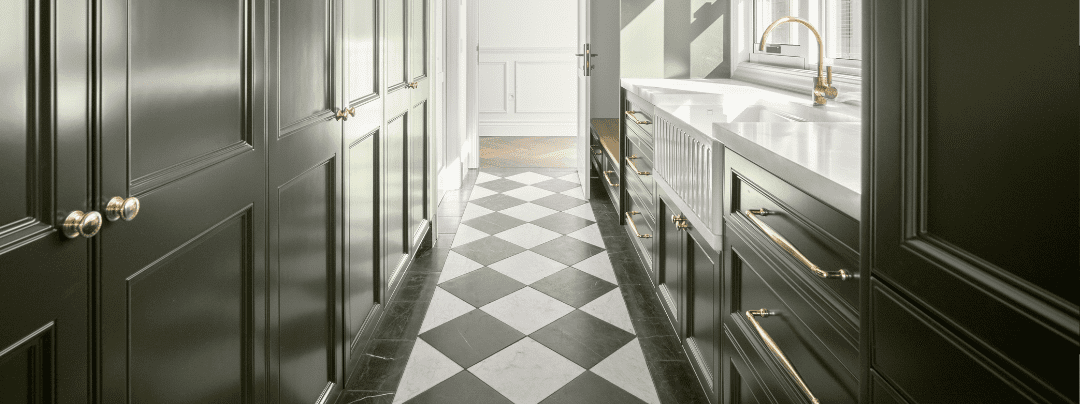
Kitchen floor tiles are a reliable choice thanks to their durability, water resistance, and easy cleaning. They are perfect for high-traffic, spill-prone areas. Ceramic, porcelain, and stone tiles are tough, long-lasting, and come in endless styles, giving you plenty of design flexibility.
One of the great things about tile is that it can be installed wall-to-wall and run under cabinets, creating a seamless, sturdy base that can handle heavy cabinetry and appliances.
On the downside, tiles can feel cold and hard underfoot, and grout lines need regular care to stay looking fresh. Installation can also take a bit more time and cost compared to other kitchen flooring materials, so it’s something to factor into your renovation plans.
Pros: Highly water-resistant, easy to clean, long-lasting
Cons: Hard underfoot, grout needs maintenance, can be expensive to install
Concrete & Stone Flooring
Concrete and natural stone are durable, stylish choices for kitchen flooring materials. From polished concrete to slate, travertine, or granite, these floors create a modern, elegant look while standing up to high traffic, heavy appliances, and everyday spills.
Stone and concrete are naturally hard-wearing and can last for decades if sealed and maintained properly. They’re also excellent for radiant heating systems, making your kitchen cosy in cooler months.
One thing to keep in mind: these materials are usually installed under kitchen cabinets, which creates a seamless, solid base for your entire kitchen. They can feel cold and hard underfoot, so adding rugs or mats in prep areas is a good idea.
Pros: Extremely durable, long-lasting, timeless style, can go under cabinets
Cons: Hard and cold underfoot, can be expensive, may require sealing
Laminate Flooring
Laminate is a versatile and affordable kitchen flooring option. It’s built with a sturdy core, usually plywood or fibreboard, for strength and stability, topped with a printed layer that mimics the look of timber, stone, or other natural finishes. This means you can get the style you love without the higher cost or upkeep.
Unlike solid hardwood, laminate is designed to sit above cabinets rather than underneath, so it’s usually installed up to the base of your kitchen units.
A protective overlay keeps the surface safe from spills, scratches, and everyday wear. Some laminate floors even have an extra underlayer for comfort, sound absorption, and added moisture resistance. All handy in a busy kitchen.
In short, laminate gives you a practical, stylish kitchen floor that can stand up to cooking, family life, and entertaining.
Pros: Affordable, easy to clean, lightweight
Cons: Sensitive to water if not waterproof, moderate durability, sits above cabinets
Luxury Vinyl Flooring
Luxury vinyl flooring (LVF) is a high-quality version of vinyl that’s perfect for a vinyl flooring kitchen. Unlike basic vinyl sheets or low-cost planks, luxury vinyl comes in thicker, more durable planks or tiles with realistic textures that closely mimic timber, stone, or ceramic, even down to the grain and feel underfoot.
LVF is waterproof, scratch-resistant, and easy to maintain, making it ideal for busy kitchens where spills, pets, and high traffic are everyday realities. Many luxury vinyl products also have a padded or underlayment layer, adding extra comfort and sound absorption.
It’s important to note that, like most vinyl, luxury vinyl is typically installed above kitchen cabinets rather than underneath, so planning your layout accordingly is key.
Pros: Realistic, durable, waterproof, easy to clean, comfortable underfoot
Cons: Doesn’t go under cabinets, can be pricier than standard vinyl, not as premium as solid timber or stone
FAQs About Kitchen Flooring
What’s the most durable kitchen flooring?
Tile, stone, and well-maintained hardwood are among the toughest options, standing up to heavy appliances and daily traffic. Hybrid flooring is also highly durable, making it a practical choice for busy kitchens.
Which flooring is best for spills and moisture?
For a kitchen prone to spills and humidity, vinyl, waterproof hybrid floors, and tile are your best friends. They’re easy to clean and can handle everyday messes without warping or staining.
Can I install flooring under cabinets?
It depends on the material. Solid timber, tile, and concrete can be installed under cabinets for a seamless look. Laminates, vinyl, and most hybrid floors are usually installed above cabinets, so the base of your units remains uncovered.
How much does kitchen flooring cost in Australia?
Costs vary widely depending on the material. Laminate or vinyl can start around $50/m², while premium stone, concrete or hardwood can reach $300/300/m² or more — installation is extra.
What’s trending in kitchen flooring right now?
Right now, Australians are loving luxury vinyl planks, engineered timber, and large-format tiles. Neutral tones, natural textures, and wood-look tiles are also in demand, combining style with practicality. People are choosing materials that are durable, easy to clean, and still make a statement in modern kitchen designs.
Planning Your Kitchen Renovation and Flooring
While we don’t install kitchen flooring ourselves, our experienced kitchen designers can help you decide if your current floors may need replacing and point you in the right direction to a trusted flooring contractor. We can also help coordinate your flooring and kitchen installation so everything flows seamlessly from start to finish.
Don’t let this guide scare you off your renovation; in many cases, you may not need to replace your floors at all. Think of this as a helpful reference to understand your options and plan.
For more tips on creating your dream kitchen, check out our Kitchen Design Tips page or download our free Kitchen Design Guide. It’s packed with advice on flooring options, lighting, benchtops, and more.
If you’re thinking about renovating, our kitchen designers are here to help. Start by exploring our Kitchen Design Gallery for inspiration, and get in touch when you’re ready to bring your new kitchen to life.
Recent Comments