
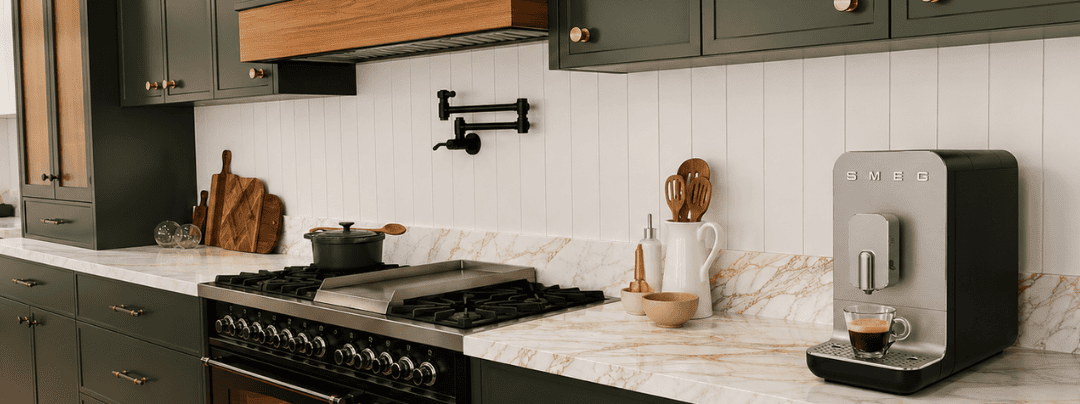
Ahh, coffee. The aroma, the flavour, the morning ritual. It awakens the senses and creates a moment to slow down and enjoy the start of the day. It’s this connection between daily rituals and thoughtful kitchen design that has seen more homeowners request dedicated coffee nooks as part of their custom kitchens.
Whether hidden behind elegant cabinetry or proudly on display, a thoughtfully designed coffee nook brings convenience, style and a little café-inspired indulgence to your home.
In this guide, we’ll explore everything you need to know about designing the perfect coffee nook, including what it is, where to position it, how much space you need, essential features, cabinetry options and the details that transform a simple coffee station into a beautifully functional part of your kitchen.
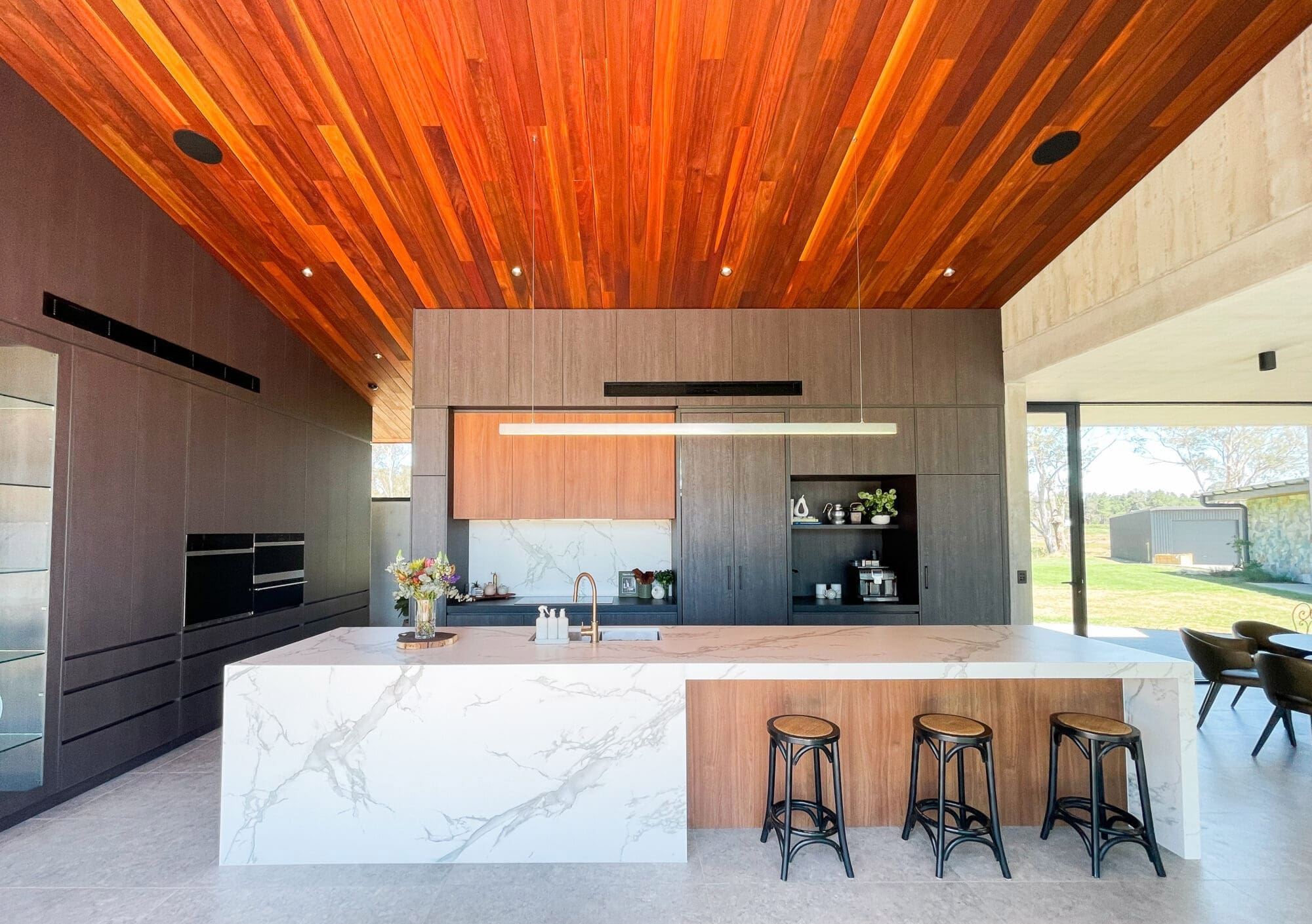
In this Spectacular and Impressive Kitchen we designed in Cobbitty, the client wanted a dedicated open coffee nook behind the kitchen island. This is a great setup if you have a coffee machine worth putting on display.
What is a Coffee Nook?
You’ll often hear a coffee nook referred to by different names, including a built-in coffee station, coffee cabinet, coffee bar or breakfast station. While the terminology may vary, the purpose remains the same: to create a practical area where coffee, tea and breakfast essentials are always within easy reach.
Some coffee nooks are cleverly concealed within an appliance garage or custom cabinetry, keeping small appliances hidden behind pocket, bi-fold or lift-up doors. When closed, the kitchen maintains a seamless, uncluttered appearance, while everything remains organised and ready to use when needed.
Others prefer an open coffee station, where beautiful coffee machines, favourite mugs and decorative accessories become part of the kitchen’s design.
The right solution ultimately depends on your lifestyle, how much space you have available and the overall style of your home.
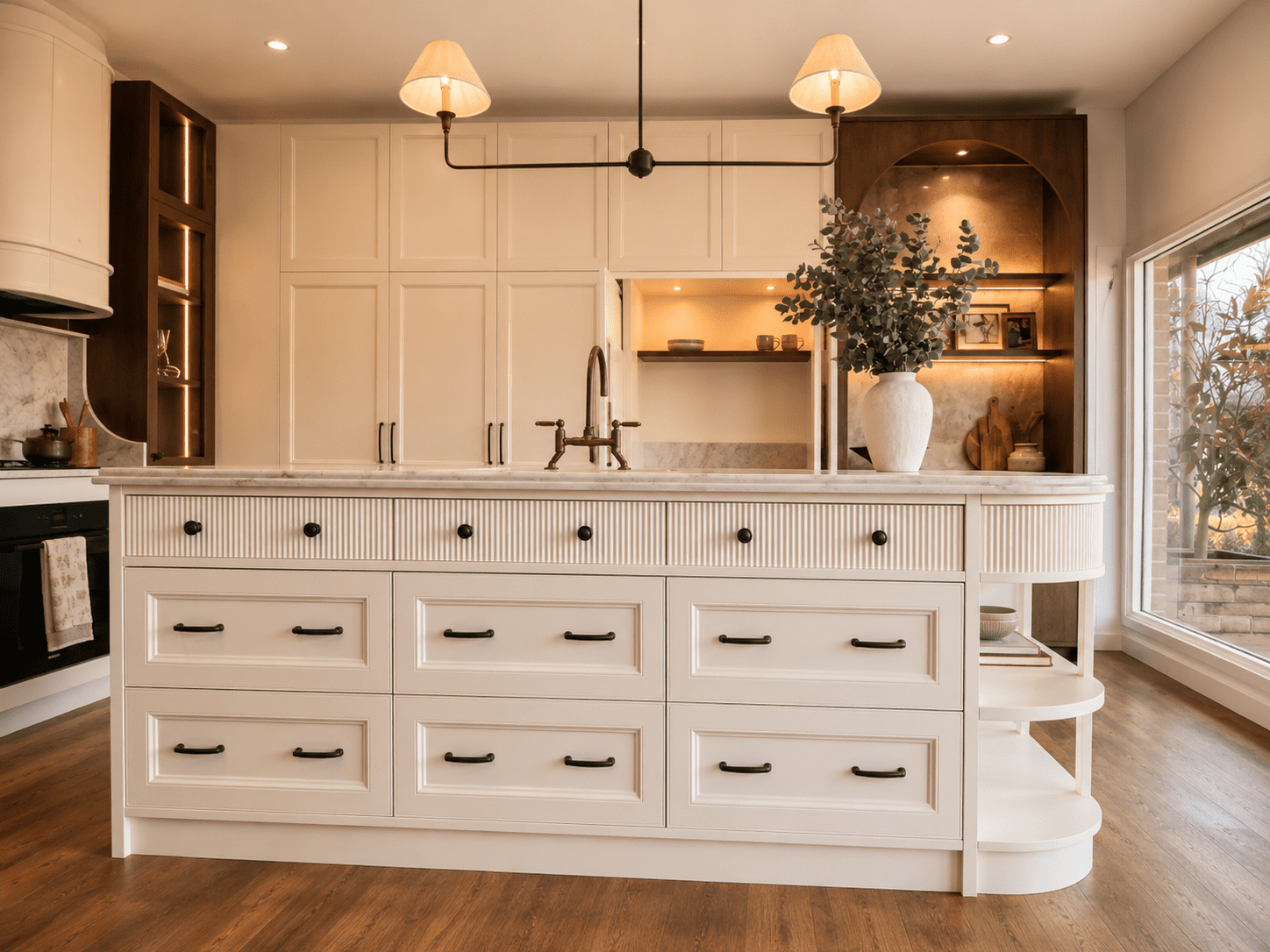
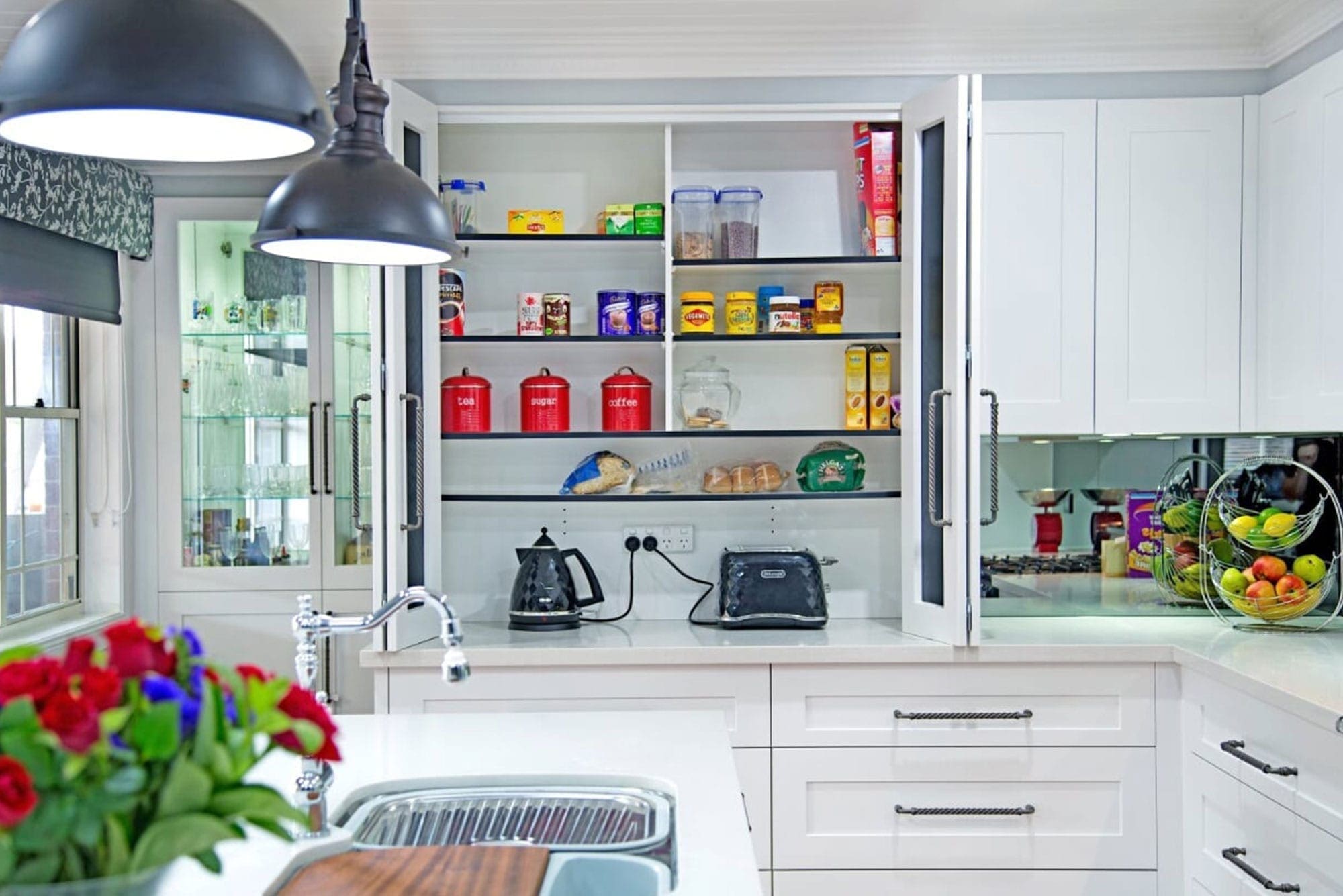
Displayed in our Bowral Kitchen Showroom, we incorporated a custom coffee nook behind the kitchen island, concealed neatly behind pocket doors. This clever placement keeps the benchtops clear and allows the walkway to remain open when the coffee station is in use, creating a practical yet beautifully integrated feature within the kitchen.
Where Should You Put a Coffee Nook?
Location is everything when designing a coffee nook. In our experience, one of the most practical positions is alongside the pantry, neatly integrated within your kitchen cabinetry. This keeps coffee, tea and breakfast essentials within easy reach while creating a dedicated breakfast station separate from the main preparation area.
By creating a separate breakfast zone, the kitchen can function more efficiently, allowing one person to prepare breakfast or make coffee while another continues cooking without interrupting the main workspace.
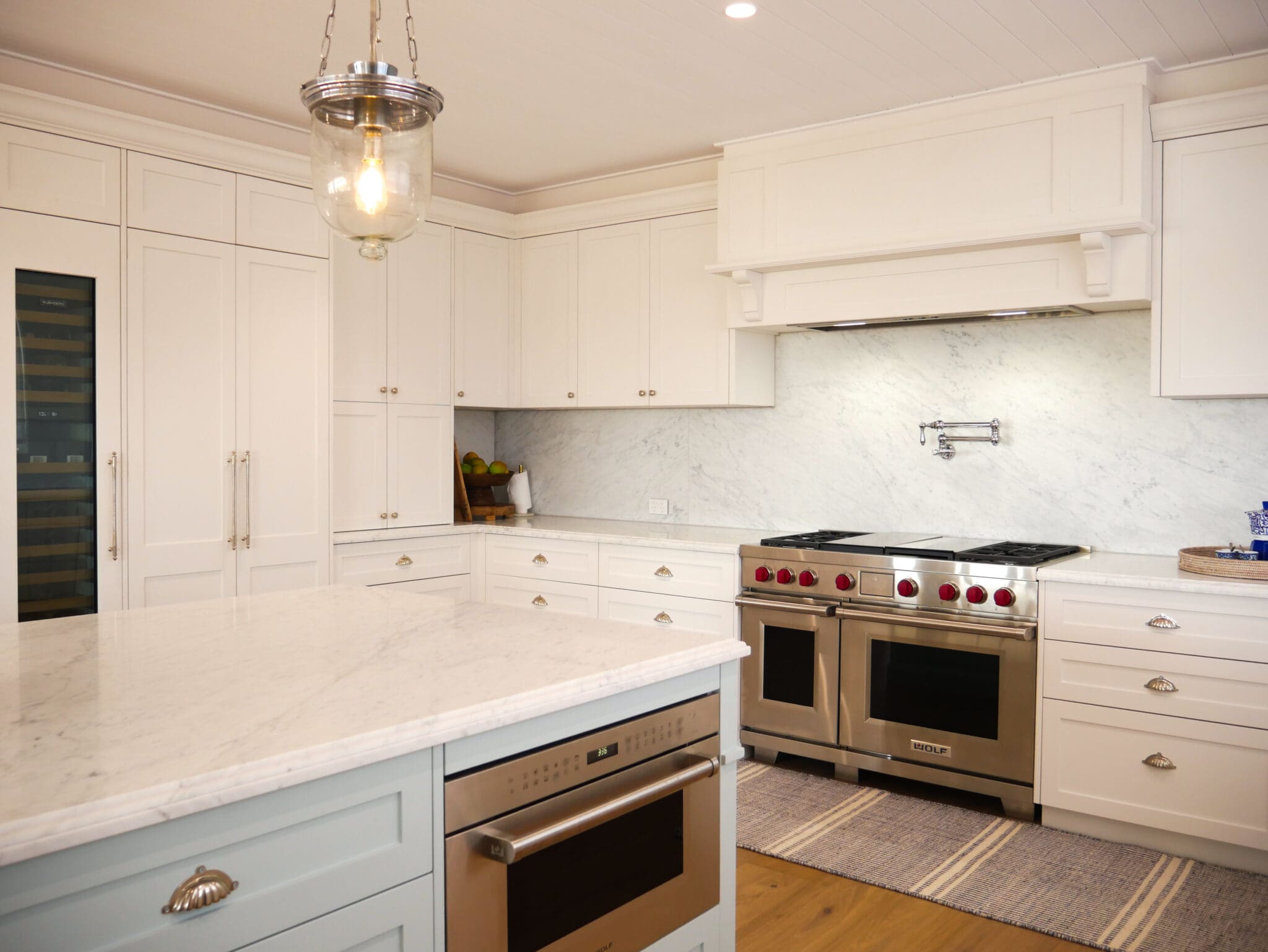
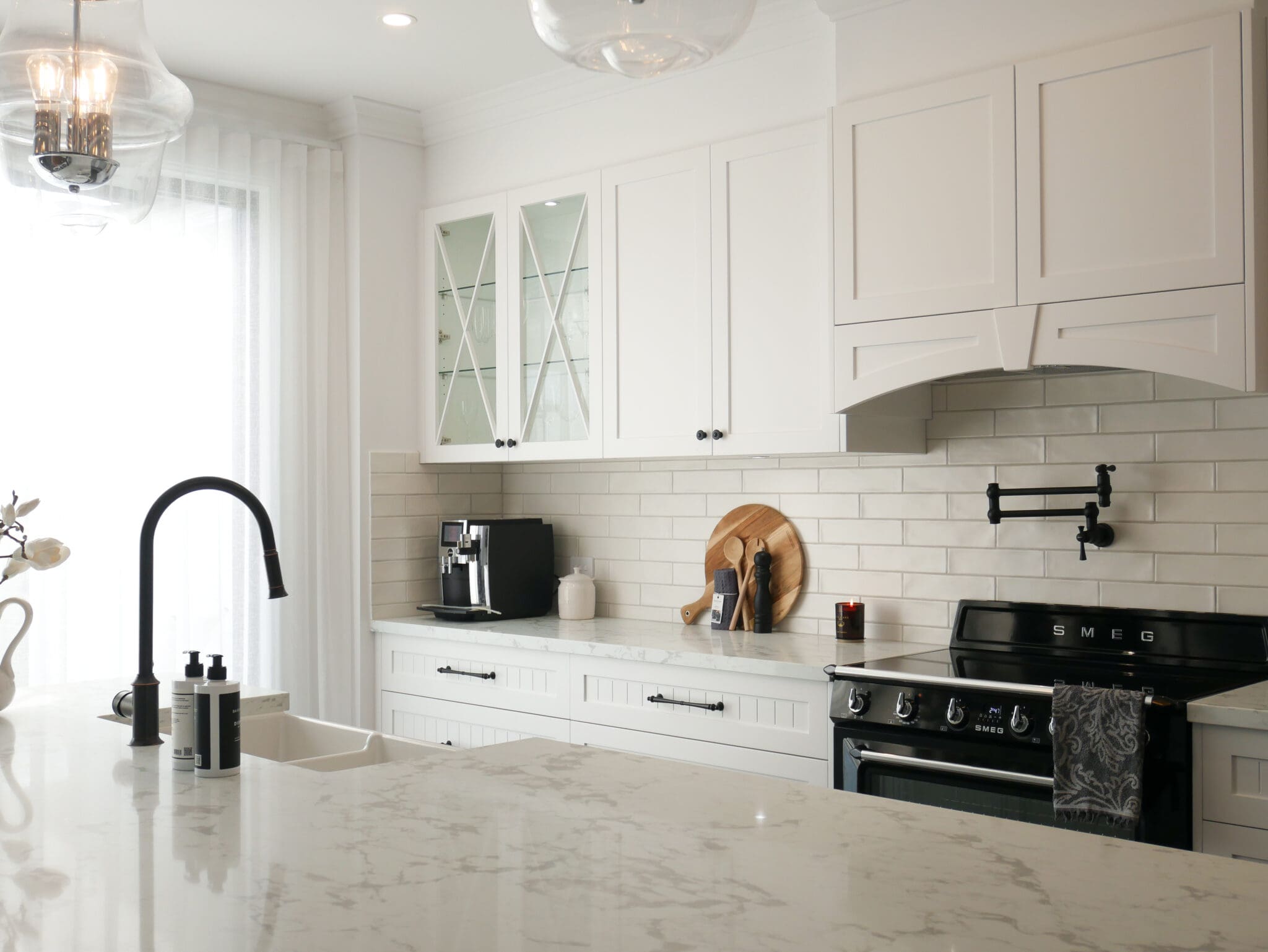
In our recently designed Brushed Painted Hamptons Kitchen in Collaroy, the client chose to conceal their coffee nook behind custom-made shaker cabinet doors. This clever design solution allows the coffee station to be neatly tucked away when not in use, maintaining the kitchen’s fresh, refined aesthetic while keeping everyday appliances easily accessible.
How Much Space Do You Need for a Coffee Bar Nook?
The ideal size of your coffee nook will depend on your coffee setup, such as appliance sizes and how you plan to use the space. Whether it’s a compact coffee station or a fully equipped breakfast station, planning the right dimensions will ensure its practical and enjoyable to use every day.
Recommended Width
- 600–800mm: Suitable for a pod machine or a compact setup.
- 900–1,200mm: Ideal for most homes, providing space for a coffee machine, mugs and accessories.
- 1,500mm+: Perfect for larger coffee stations with additional storage or breakfast appliances.
Bench Depth
- A standard 600mm deep benchtop is generally ideal, providing enough room for most coffee machines while leaving space to prepare drinks comfortably.
Overhead Cabinet Height
- Allow enough clearance above your coffee machine to easily refill the water tank, access bean hoppers and operate the machine without restriction, especially if it’s housed inside an appliance garage.
Storage & Coffee Machine Clearance
- Remember to include storage for mugs, coffee beans or pods, tea, sugar and other essentials. Before finalising your cabinetry, measure your coffee machine and allow extra room for steam, opening lids and routine cleaning.
Designer Tip: Choose your coffee machine before designing your cabinetry. Planning around your appliances ensures the perfect fit and helps future-proof your coffee nook if you decide to upgrade later.
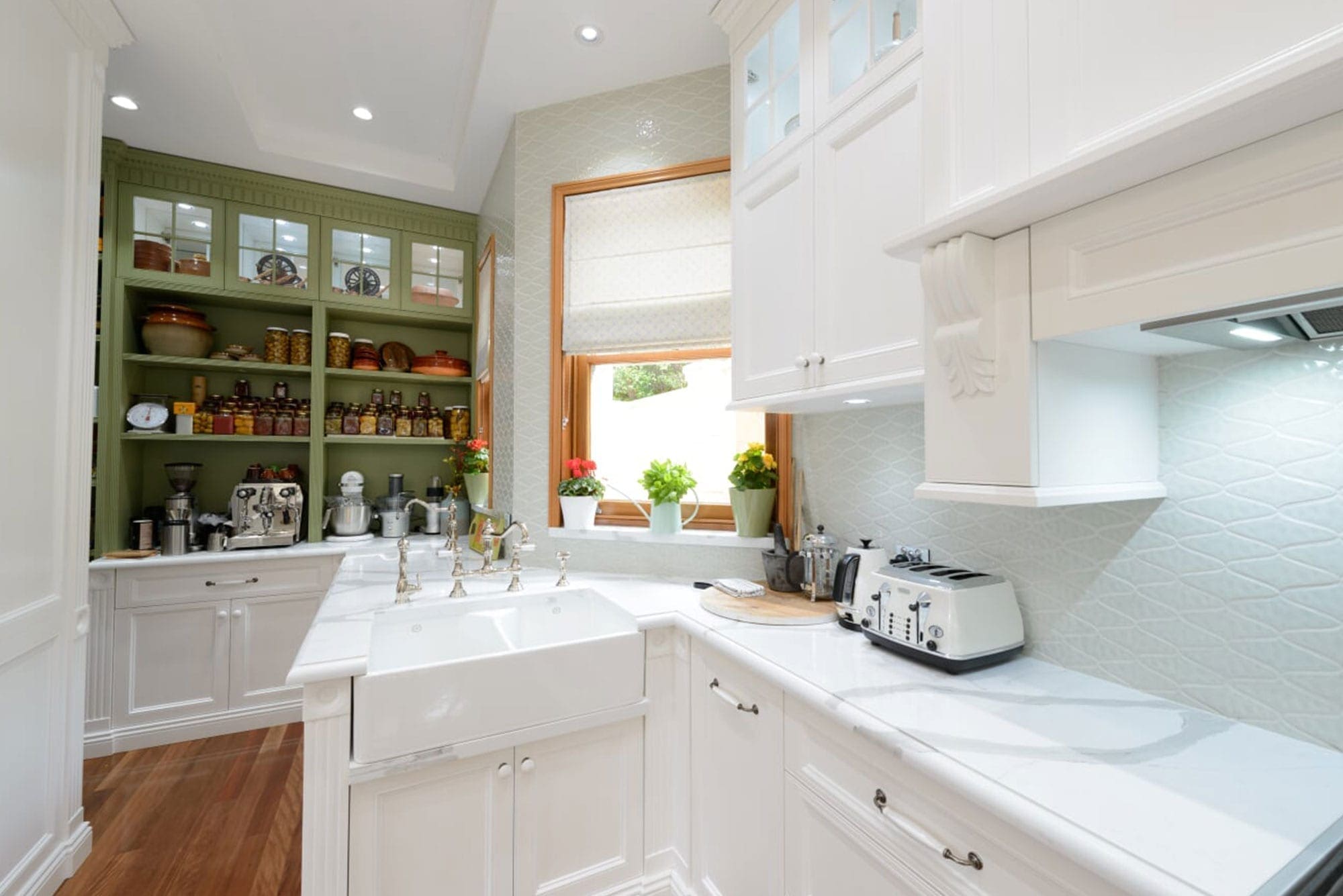
In this kitchen in Concord, the client chose to make their coffee machine part of the overall design by incorporating it into the open shelving. This creates a practical and stylish coffee station while allowing their favourite appliances and accessories to become a feature within the space.
What Should Every Coffee Station Include?
The best coffee nooks are designed around your daily routine. Here are the key features to consider when planning your space.
|
Feature |
Why Include It? |
|
Coffee Machine |
Choose a machine that suits your lifestyle, whether it’s a compact pod machine for convenience or a manual espresso machine for the home barista. |
|
Coffee Grinder |
opt for a built-in space if you enjoy freshly ground coffee every morning. |
|
Mug Storage |
Keep your favourite mugs within easy reach using open shelving or dedicated cabinetry. |
|
Tea Drawer |
Perfect for households that enjoy both coffee and tea, keeping tea bags and accessories neatly organised. |
|
Sugar & Syrups |
A shallow drawer or small shelf keeps everyday extras tidy and easy to access. |
|
Hidden Bin |
Ideal for disposing of used coffee pods, filters or tea bags without walking across the kitchen. |
|
Charging Station |
Great for charging phones or tablets while enjoying your morning coffee, without cluttering the benchtop. |
|
Water Filtration |
A filtered water tap improves coffee flavour and helps protect your machine from mineral build-up. |
|
Integrated Power Points |
Position power points inside the coffee nook so appliances remain plugged in while cords stay hidden. |
|
LED Lighting |
Under-cabinet lighting makes preparing drinks easier and adds warmth and ambience to the space. |
|
Pull-Out Shelves |
Perfect for storing heavier appliances or creating easier access in deeper cabinets. |
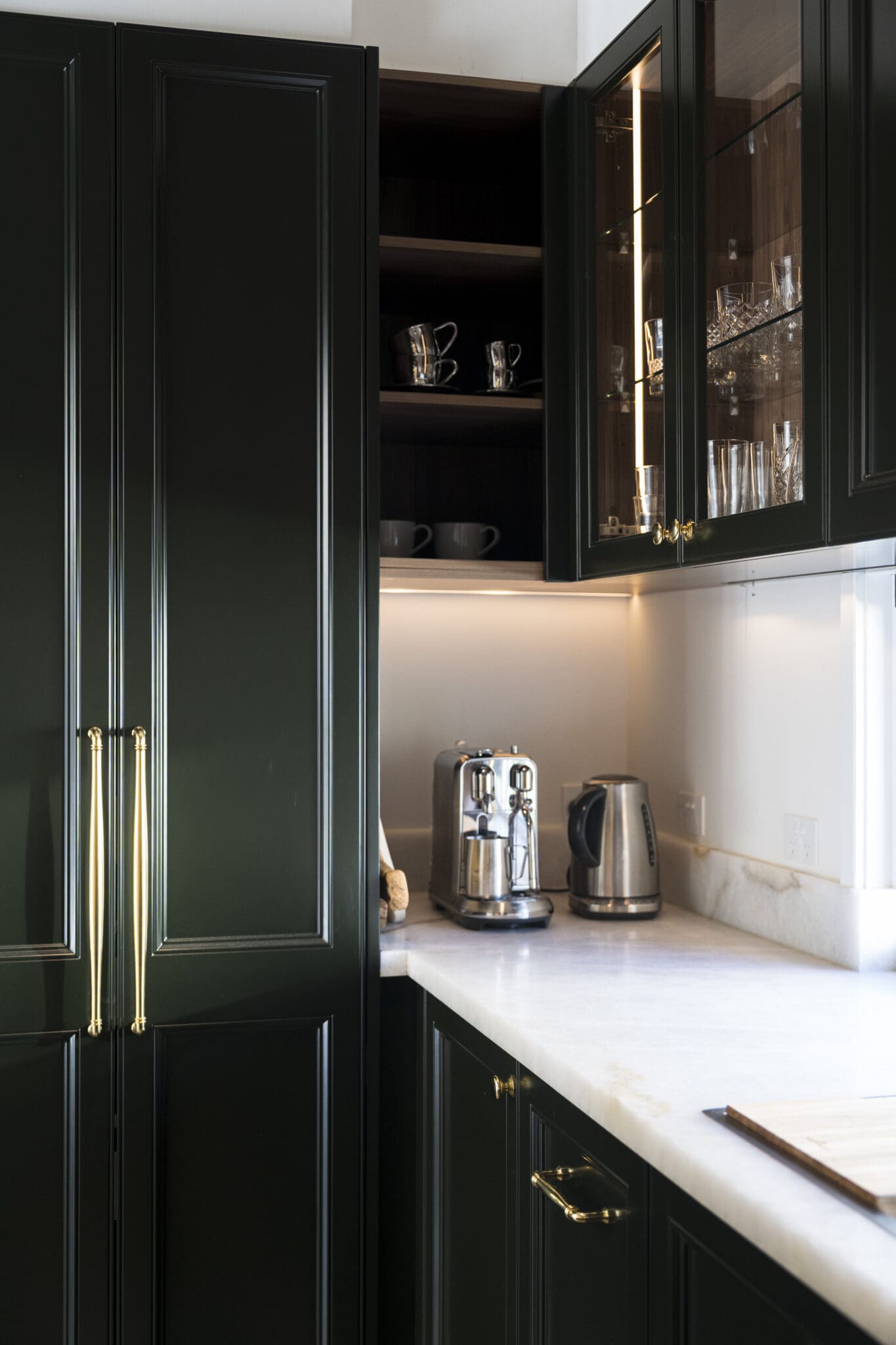
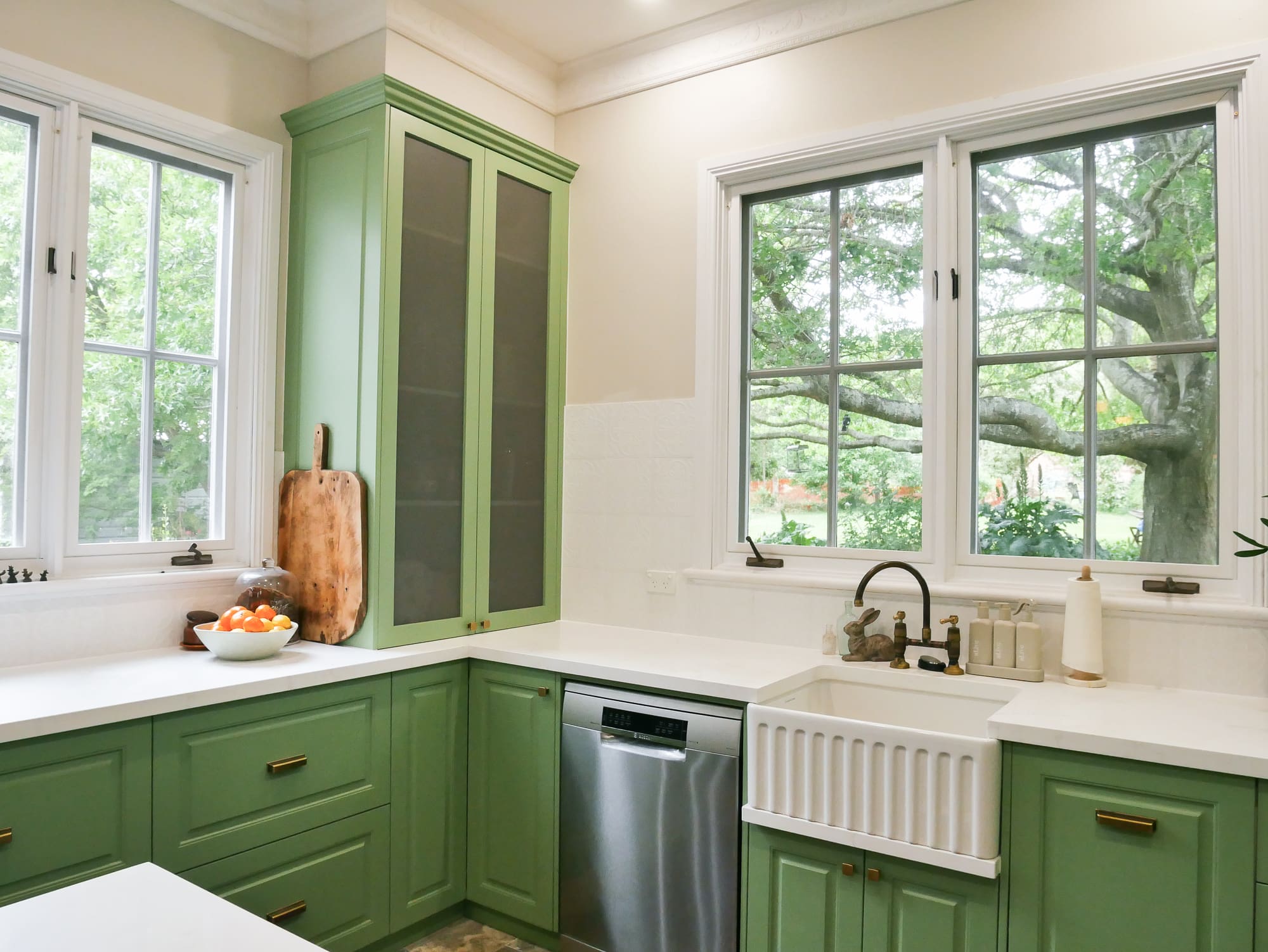
In this forest green butler’s pantry from our Callala Beach project, the coffee nook has been thoughtfully incorporated into the corner space, creating a dedicated area for everyday coffee rituals. Open shelving above provides the perfect spot to display mugs and accessories, adding both practicality and personality to the design.
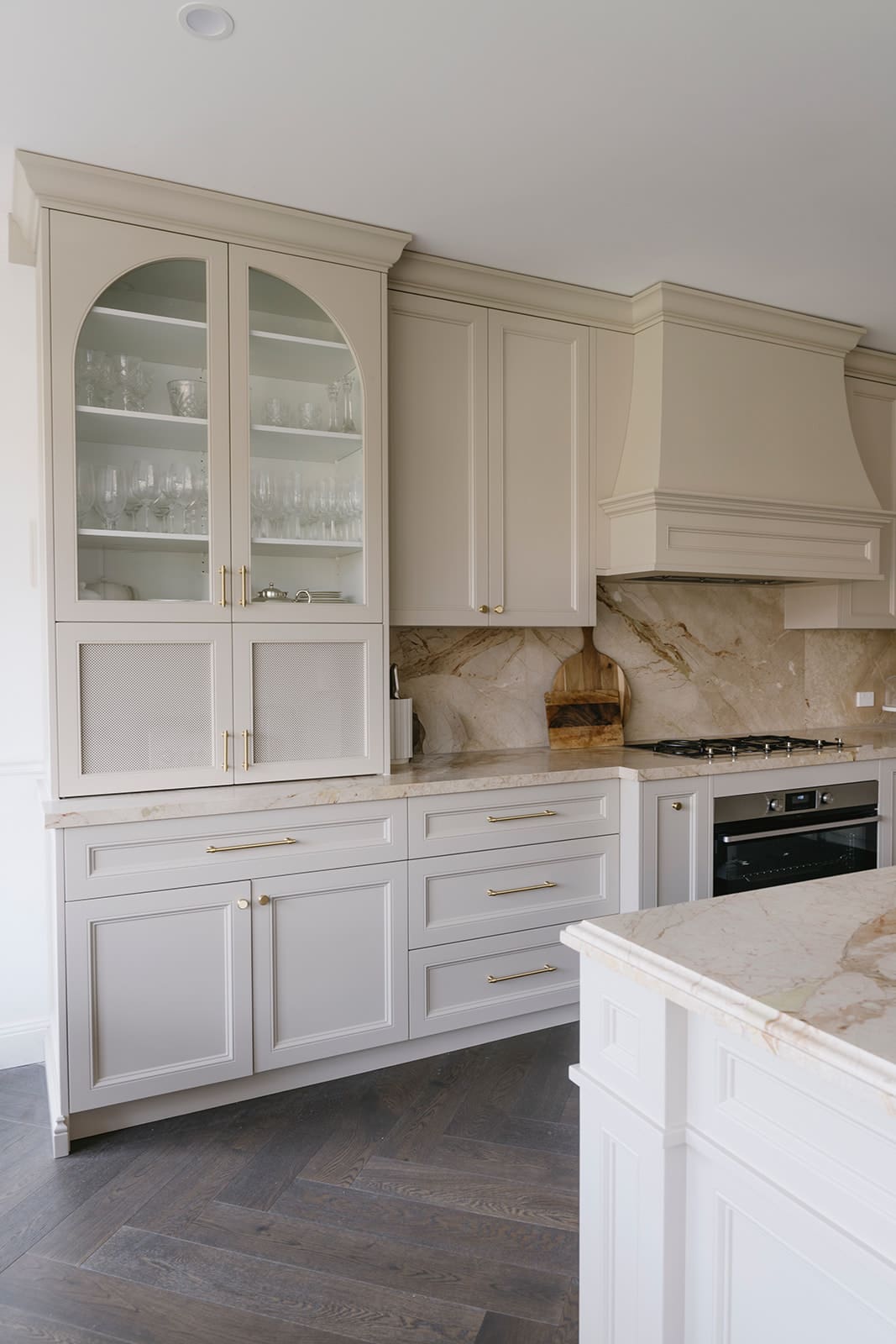
In our Grand Classic beige kitchen in Castle Hill, the client wanted to showcase her glassware, so glass cabinets were incorporated to beautifully display her collection, while the breakfast station below was cleverly concealed behind mesh doors, keeping everyday appliances accessible while reducing visual clutter.
Hidden Coffee Nook vs Open Coffee Station: Which Is Right for You?
When designing a coffee nook, one of the biggest decisions is whether you want your coffee station concealed behind cabinetry or displayed as part of your kitchen design. Both options offer different benefits depending on your lifestyle and the overall look you want to achieve.
|
Hidden Coffee Nook |
Open Coffee Station |
|
Creates a clean, seamless kitchen appearance. |
Keeps your coffee essentials visible and easily accessible. |
|
Reduces visual clutter by hiding appliances when not in use. |
Allows you to showcase beautiful coffee machines, mugs and accessories. |
|
Often incorporated into an appliance garage with pocket, bi-fold or lift-up doors. |
Works well with open shelving, feature cabinetry or decorative displays. |
|
Ideal for minimalist, contemporary or clutter-free kitchen designs. |
Perfect for entertainers or coffee lovers who enjoy making the coffee station a feature. |
|
Best suited for homeowners who prefer a streamlined look. |
Best suited for homeowners who enjoy styling and personalising their space. |
Designer Tip: Many of our clients choose a combination of both, a concealed appliance garage for everyday appliances, paired with open shelving or glass cabinetry to display favourite mugs and accessories.
The Best Cabinetry Options for a Home Coffee Nook
The cabinetry you choose for your coffee nook will influence both the look and functionality of the space. From concealed appliance garages to elegant display cabinets, the right door style can help create a coffee station that feels organised, practical and beautifully integrated into your kitchen design.
Pocket Doors
Best for: A sleek, hidden coffee station with a premium feel.
Pocket doors slide neatly into the sides of the cabinet when open, allowing your coffee machine and accessories to remain accessible without doors getting in the way.
Pros:
- Creates a clean, seamless appearance.
- Keeps appliances hidden when not in use.
- Ideal for modern and minimalist kitchens.
Consider: Requires enough cabinet depth and quality hardware to ensure smooth operation over time. Beautiful in the right setting, but far less cost effective than other options.
Bi-fold Doors
Best for: Homeowners who want a concealed station with easy access.
Bi-fold doors fold back on themselves, creating a wide opening while keeping the doors neatly tucked away.
Pros:
- Maximises access to your coffee station.
- Great for larger appliance setups.
- Allows the coffee nook to feel open while in use.
- Cost effective and efficient.
Consider: By far our most popular set up for coffee and appliance nooks. Quality hinges and hardware are essential, as larger doors need to support regular movement.
Explore the benefits of bi-fold doors with our Benefits of Bi-fold Kitchen Cabinet Doors blog.
Appliance Garage
Best for: Keeping everyday appliances hidden while maintaining a clutter-free kitchen.
An appliance garage is one of the most popular choices for coffee nooks, creating a dedicated zone for coffee machines, grinders and breakfast essentials.
Pros:
- Keeps benchtops clear.
- Creates a dedicated breakfast station.
- Allows appliances to stay plugged in and ready to use.
Consider: Ventilation and internal finishes are important, as enclosed appliances can create heat and steam.
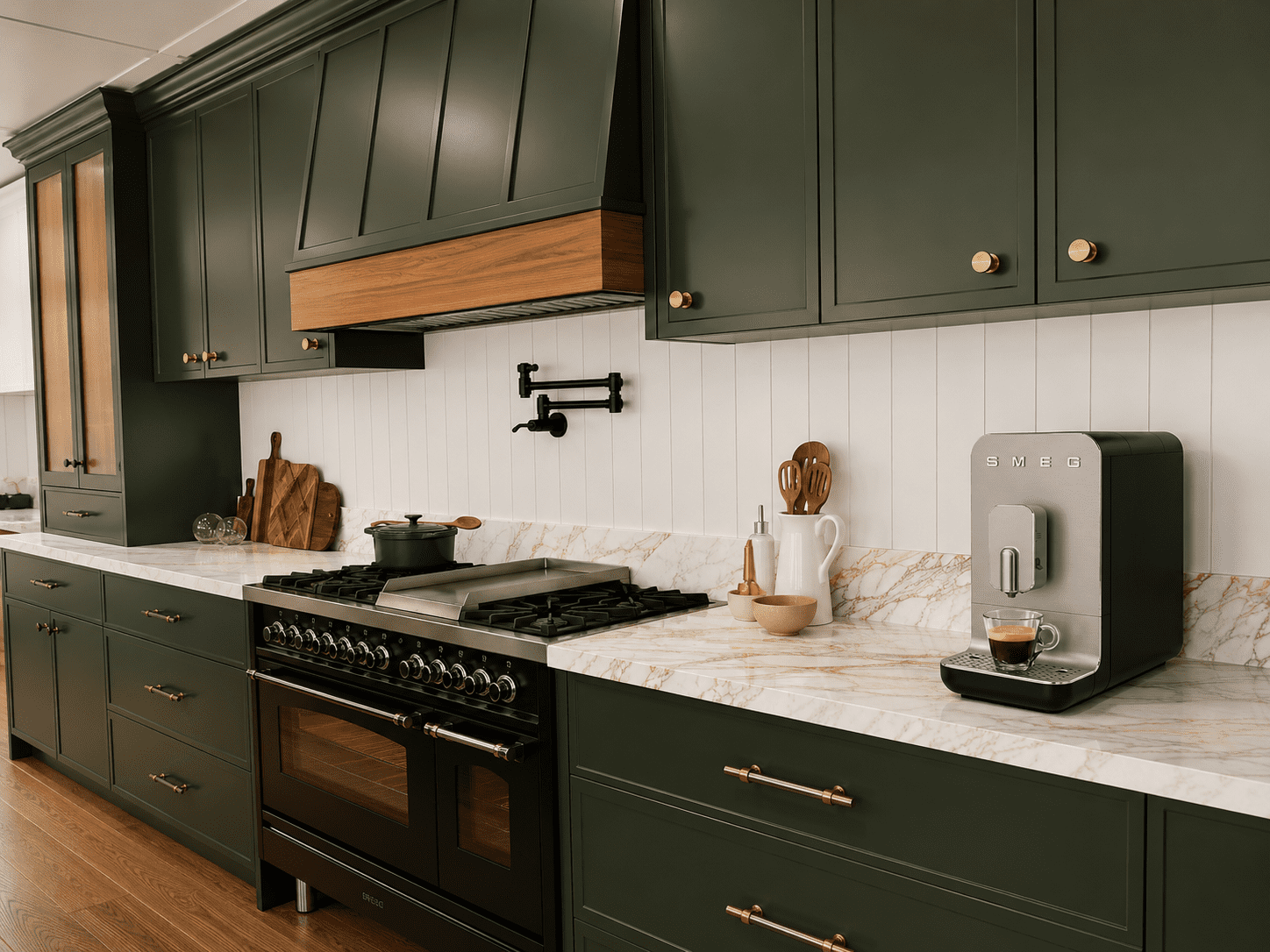
See how we used mesh cabinet doors for this appliance garage design in Castle Hill.
Don't Forget the Inside of Your Coffee Nook
While the exterior design gets most of the attention, the internal construction of your coffee station is just as important. Coffee machines create heat, steam and moisture, so choosing quality cabinetry materials and finishes helps protect the longevity of your kitchen.
When designing an enclosed coffee nook, consider:
- Durable internal cabinetry finishes that can withstand daily use and moisture.
- Easy-to-clean surfaces around the coffee machine where spills and residue are common.
- Quality hardware designed for frequent opening and closing.
- Adequate ventilation to allow heat and steam to escape.
- Heat-resistant benchtop materials beneath coffee machines and kettles.
A beautifully designed coffee nook should not only look impressive on day one, but it should also continue to perform for years to come.
Coffee Nook Mistakes to Avoid
A well-designed coffee nook should make your morning routine easier, not create frustration. While the focus is often on the appearance, the small planning details are what make a coffee station truly functional.
Not Enough Power Outlets
A common mistake is forgetting how many appliances you’ll actually use. Plan for your coffee machine, grinder, kettle, milk frother and any future additions so cords stay hidden and accessible.
Doors That Block Access
Poorly positioned cabinet doors can make using your coffee station awkward. Consider solutions such as pocket doors, bi-fold doors or lift-up mechanisms that keep the workspace clear when open.
Poor Lighting
Coffee preparation often happens early in the morning, so adequate lighting is essential. Under-cabinet LED lighting can improve visibility while adding warmth and ambience to the space.
No Ventilation
Ensure enclosed coffee stations have adequate airflow to prevent heat and moisture build-up.
Bench Space That’s Too Shallow
A coffee machine may fit, but you also need room to prepare drinks, fill cups and clean up spills. Always consider the depth of your appliances before finalising your cabinetry.
Not Enough Mug Storage
A beautiful coffee nook still needs to be practical. Dedicated drawers, shelves or cabinetry keep mugs, glasses and everyday essentials organised and within easy reach.
Forgetting the Milk Frother
Many homeowners plan around the coffee machine but forget the accessories that make the experience complete. Allow space for milk frothers, scales, grinders and other coffee essentials.
Designing Only for Today
Your coffee habits may change over time. Allowing extra storage, power points and flexible shelving can ensure your coffee nook continues to work as your needs evolve.
Designer Tip: The best coffee nooks are designed around how you actually use your kitchen, not just how they look. Thinking through your daily routine before construction begins ensures your coffee station feels effortless from the first morning onwards.
For more kitchen design tips, explore our dedicated page for more exclusive tips and gain access to our downloadable kitchen design PDF guide.
Create Your Perfect Coffee Nook with Harrington Kitchens
After 30 years of designing and manufacturing custom kitchens, we’ve learned that the most successful spaces begin with one thing: listening.
Listening to how you start your morning, how your family moves through the kitchen, and the small rituals that make your home unique. For many homeowners, that quiet moment with a morning coffee is more than just a routine, it’s a moment to pause, recharge and enjoy the space they’ve created.
These details help shape the design direction for a truly personalised coffee nook, whether it’s seamlessly integrated into your kitchen cabinetry or thoughtfully positioned within a butler’s pantry.
If you’re ready to create a coffee station that feels uniquely yours, explore our kitchen design gallery for more coffee nook inspo, then visit one of our dedicated showrooms to experience the quality craftsmanship behind every Harrington Kitchens design.
Our experienced kitchen designers will work with you to create a space that not only looks beautiful but works effortlessly around the way you live.
Recent Comments